

Brains Meet Beauty: How Smart Are Goldendoodles, Really?
Unpacking the "Scholar" Soul of the Windsong Teddy Bear
If you’ve ever looked into the eyes of a Windsong puppy and felt like they were actually reading your mind, you aren't imagining things. At Windsong Doodles, we often joke that we don't just raise puppies; we raise scholars. For over a decade, we’ve watched our "Teddy Bears" outsmart baby gates, master potty training in record time, and provide intuitive emotional support that leaves their owners in awe.
But how smart are they, really? To understand the brain of a Goldendoodle, you have to look at the "genetic cocktail" that makes them one of the most capable breeds on the planet.
The IQ of a Scientist, the Heart of a Hero
The Goldendoodle is a cross between the Poodle—consistently ranked as the second-smartest dog breed in the world—and the Golden Retriever, a breed famous for its work ethic and desire to please.
When you combine these two, you get a dog that doesn't just have a high IQ (Intelligence Quotient) for learning commands, but also a remarkably high EQ (Emotional Quotient). This combination is what we call the "Windsong Soul." It’s the reason they can learn a new trick in three repetitions but also know to sit quietly beside you when you’ve had a difficult day.
Nurturing the "Sixth Sense" in the Nursery
Intelligence is part nature, but it is also part nurture. This is where our Puppy Kindergarten curriculum changes the game. Starting at Day 3, we utilize Early Neurological Stimulation (ENS) to jump-start their brain development.
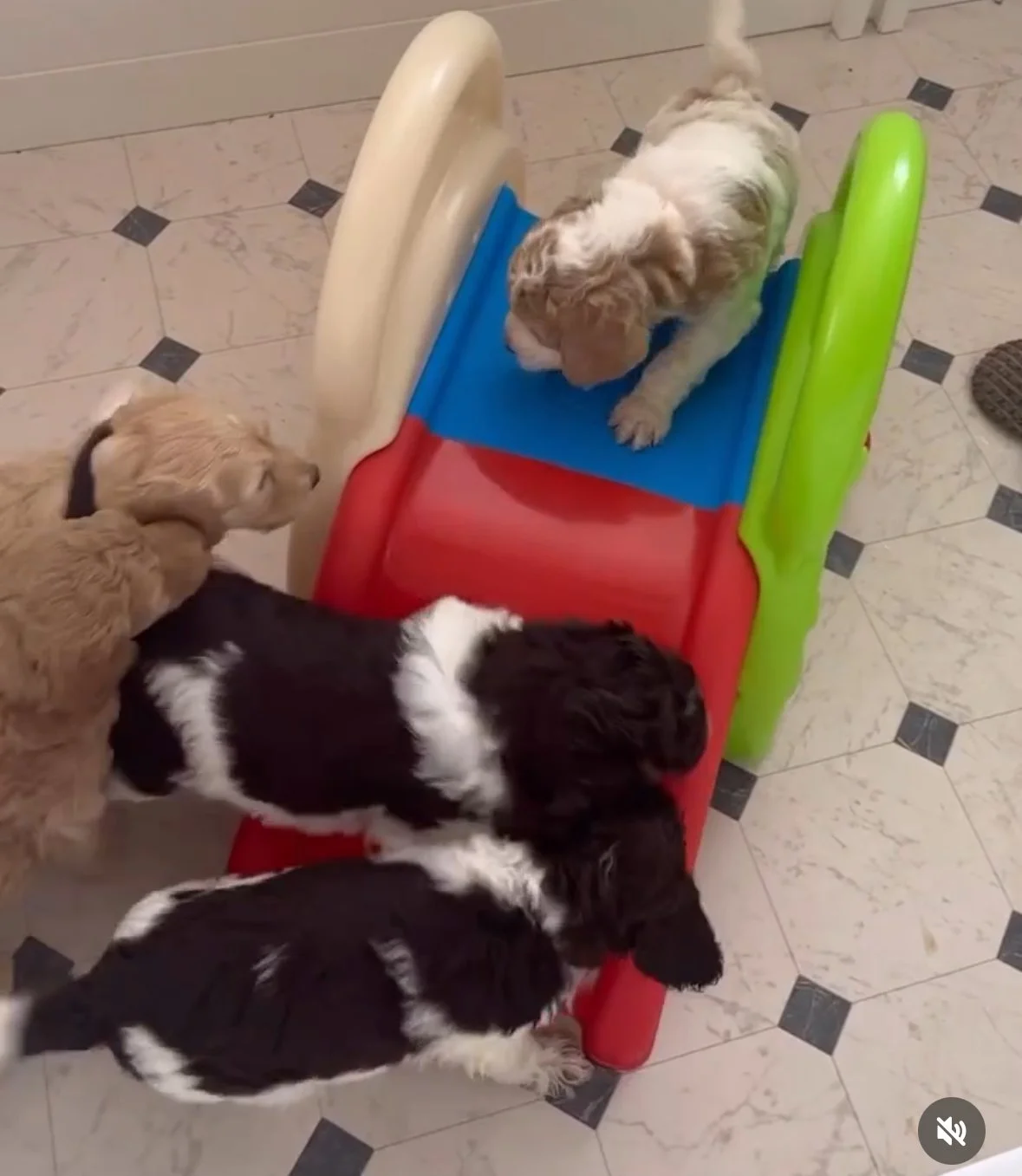
Because we raise our puppies "underfoot" in our living room, they are constantly solving mini-puzzles. They learn to navigate different textures, sounds, and the "beautiful commotion" of our five children. This early education ensures that by the time they reach your sofa, their "learning switch" is already turned on. They aren't just reacting to the world; they are processing it.
Practical Intelligence vs. "Selective Smartness"
Doodles are world-class problem solvers. If there is a way to get into the snack cupboard or convince you that they haven't been fed yet, they will find it. This high intelligence means they need a "mission." Without mental stimulation (like the Enrichment Games we discuss in our Hub), a bored Doodle will use their brain to "re-style" your living room.
You might also notice a season of "selective smartness" during the teenage phase (6–18 months). This is when they know exactly what "Come" means, but their big brain is weighing the pros and cons of returning to you versus chasing that butterfly. Stay patient—it’s just the scholar testing the boundaries!
Bred for Purpose
This unique intelligence is why so many of our graduates find success as Service and Therapy dogs. They have the focus required for complex tasks and the empathy required for emotional connection.
Whether they are navigating a busy airport in Seattle or providing a grounding presence in a quiet home in Malibu, a Windsong Doodle is always "on duty." They don't just follow your commands; they follow your heart. When you welcome a Windsong companion, you aren't just getting a pet—you're getting a genius in a Teddy Bear suit.