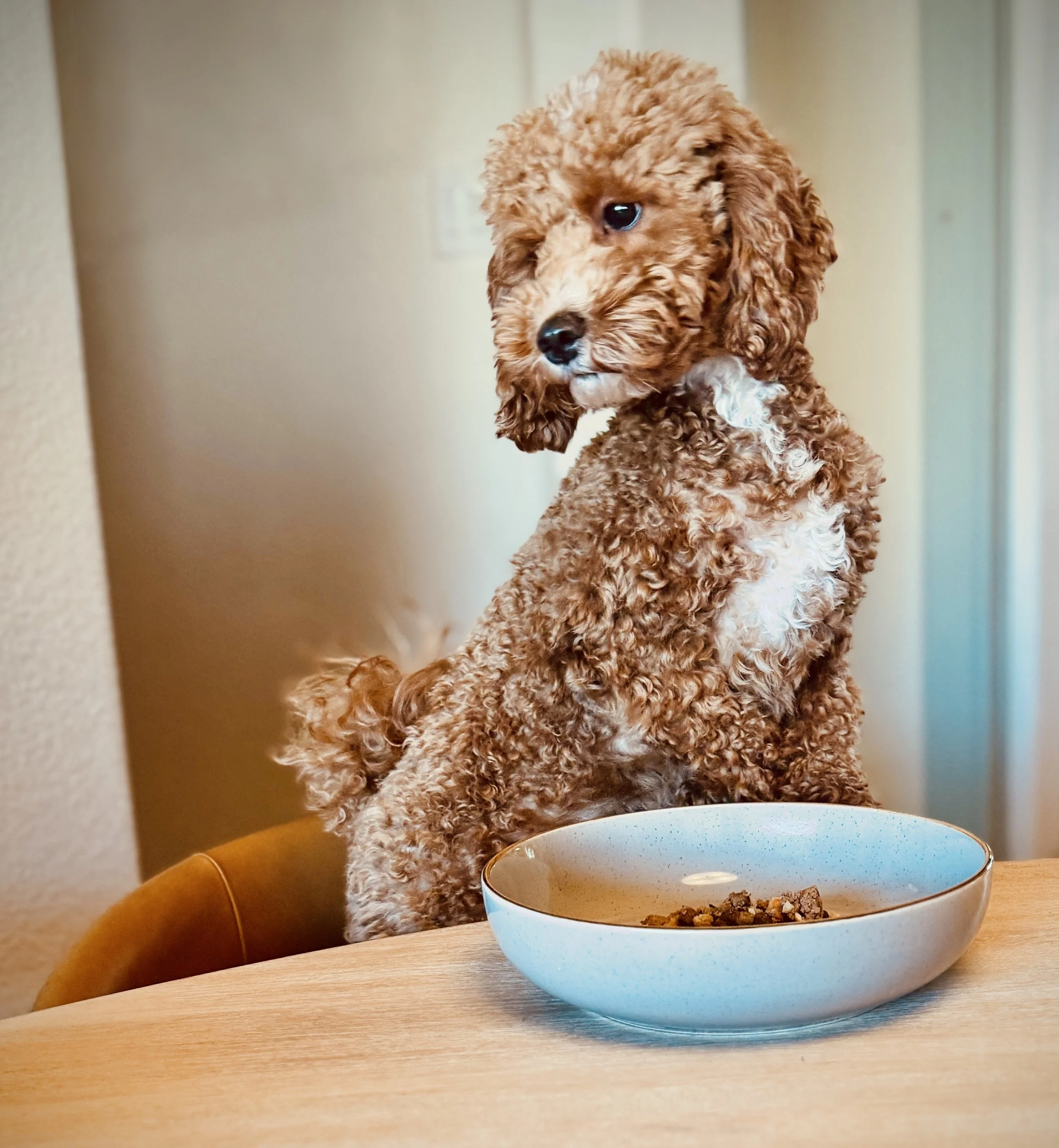
A Windsong guide to little treats, tempting traditions, and those very persuasive eyes.
The kitchen smells wonderful, familiar faces are arriving, and your Goldendoodle has quietly identified the person most likely to share and reassigned themselves to that person’s chair.
Some things come naturally to our Teddy Bears.
Whether you’re celebrating your puppy’s first Thanksgiving or sharing another holiday with your devoted companion, it’s natural to want to make them a little plate of their own. At Windsong Doodles, we love including our dogs in family traditions. The secret is knowing which holiday foods are safe for dogs—and remembering that a little taste goes a long way.
Turkey: A Little of the Good Stuff
Yes, many healthy dogs can enjoy a small amount of plain, fully cooked white turkey meat. Remove all skin and bones, and offer bite-sized pieces without butter, gravy, or seasoning.
Check how the turkey was prepared, too. Meat cooked with unsuitable ingredients, such as onions or garlic, shouldn’t make its way into your dog’s bowl.
Your Doodle doesn’t need a generous serving to appreciate the occasion. A few carefully chosen bites can feel quite special when they’re delivered by their favorite person.
Sweet Potatoes, Before the Marshmallows
There’s a lovely little window during holiday cooking when the sweet potatoes are simply sweet potatoes.
That’s your moment.
Set aside a small portion of plain, cooked sweet potato before adding butter, sugar, or toppings. Let it cool, remove the peel, and cut it into soft, manageable pieces. Plain green beans and soft, cooked carrots can also be suitable choices in small amounts.
Keep the casseroles on the family table. Their sauces, rich ingredients, and onion toppings can turn a simple vegetable into something your dog shouldn’t eat.
A Little Pumpkin for Your Little Shadow
If your Goldendoodle follows you from the oven to the refrigerator and back again, you already know that holiday cooking is a team activity. At least from their perspective.
A small taste of 100% plain pumpkin purée can be an option for your faithful helper. Check the can carefully: pumpkin pie filling is different, and the finished pie belongs on the human dessert menu.
Set their plain portion aside before the baking begins, and you’ll both have something to look forward to.
The Holiday Foods That Stay on Your Plate
Those soulful eyes can make almost anything feel shareable. But some ingredients need to stay completely out of reach:
● Chocolate and cocoa
● Grapes and raisins, including those in baked goods and stuffing
● Onions, garlic, leeks, and chives, including powdered forms
● Xylitol, sometimes labeled “birch sugar,” found in some sugar-free sweets, gum, baked goods, and nut butters
● Macadamia nuts
● Alcohol and raw yeast dough
These can cause poisoning or other serious illness. Read ingredient labels rather than assuming a small treat is suitable.
Cooked bones are also off-limits. They can splinter, cause choking, or damage or block the digestive tract. Turkey skin, gravy, and fatty scraps can cause digestive upset and may trigger pancreatitis, a painful condition requiring veterinary care.
One Little Bite Has a Way of Becoming Five
Goldendoodles are wonderfully attentive companions. During holiday dinner, that attentiveness may extend to every person holding a fork.
A little turkey from one guest, another taste from someone clearing plates, and suddenly your dog has enjoyed considerably more than you planned.
Choose one person to handle treats, and let guests know to check before sharing. You can put a small allowance of approved treats in a separate container so everyone knows what’s available.
Your Doodle may continue making the rounds. Being told “you’ve already had yours” rarely discourages a hopeful heart.
For Puppies, Familiar Is Festive Enough
A first holiday brings plenty of new experiences without introducing a whole new menu.
Keep your puppy’s regular food and mealtimes consistent. If you offer a holiday taste, choose a tiny amount of one suitable food they already tolerate. Their regular kibble can also be a reward for settling beside you or keeping four little paws on the floor.
The same gentle approach works for adult dogs: small portions, familiar foods, and no sudden holiday feast. What counts as a little taste should reflect your dog’s size.
For dogs with allergies, sensitive digestion, a history of pancreatitis, or a prescribed diet, ask your veterinarian before adding holiday extras.
When the Table Is Cleared, Keep an Eye on the Kitchen
The family may be ready to settle onto the sofa, but your Goldendoodle can probably still smell the turkey.
Put leftovers away promptly, clear unattended plates, and secure bones, carcasses, wrappers, and scraps in a container your dog cannot access. Low coffee tables deserve attention, too—especially when the conversation gets lively and the appetizers are briefly forgotten.
If They Eat Something They Shouldn’t
If your dog eats a potentially toxic food, contact your veterinarian or an animal poison-control service promptly. Don’t wait for symptoms. Keep the packaging or recipe, and note roughly how much they ate and when.
Repeated vomiting, abdominal pain, marked lethargy, tremors, or other concerning symptoms also need prompt veterinary attention.
Their Favorite Part Is Being with You
A little plain turkey or a taste of sweet potato can be a lovely addition to your dog’s holiday. But so can a familiar dinner, a quiet walk, and a comfortable place beside you when the house finally settles.
At Windsong Doodles, that’s the part of the Golden Life we treasure most: our dogs becoming part of the traditions, memories, and everyday moments that make a family.
Here’s to a holiday filled with good company, comfortable tummies, and a soft, familiar head resting on your knee.
Frequently Asked Questions:
1. Can Goldendoodles eat turkey during Thanksgiving or other holiday celebrations?
Yes, healthy Goldendoodles can enjoy a small amount of plain, fully cooked white turkey meat. Remove all skin and bones, and cut the meat into bite-sized pieces. Avoid butter, gravy, and seasonings. Always check how the turkey was prepared, as onions and garlic are harmful to dogs. A few carefully prepared bites are enough to make your Doodle feel included.
2. Are sweet potatoes, green beans, and carrots safe for Goldendoodles?
Yes, plain cooked sweet potatoes, green beans, and soft carrots can be suitable treats in small amounts. Set aside sweet potatoes before adding butter, sugar, marshmallows, or toppings. Let them cool, remove the peel, and cut them into manageable pieces. Avoid vegetable casseroles, rich sauces, seasonings, and onion toppings, as these ingredients can be unsuitable for dogs.
3. Can Goldendoodles eat pumpkin during the holidays?
Yes, Goldendoodles can enjoy a small taste of 100% plain pumpkin purée. However, always check the can carefully because pumpkin pie filling is different and may contain added ingredients unsuitable for dogs. Set aside a plain portion before preparing holiday desserts. Keep the finished pumpkin pie on the human dessert menu rather than sharing it with your dog.
4. Which holiday foods are toxic or dangerous for Goldendoodles?
Keep chocolate, cocoa, grapes, raisins, onions, garlic, leeks, chives, xylitol (birch sugar), macadamia nuts, alcohol, and raw yeast dough away from your Goldendoodle. These ingredients can cause poisoning or serious illness. Remember that they may be hidden in stuffing, baked goods, sugar-free sweets, chewing gum, and nut butters. Always read ingredient labels before sharing food.
5. Why should Goldendoodles avoid cooked bones, turkey skin, and gravy?
Cooked bones can splinter, cause choking, or damage and block your dog's digestive tract. Turkey skin, gravy, and fatty scraps can cause digestive upset and may trigger pancreatitis, a painful condition requiring veterinary care. Even if your Goldendoodle eagerly begs for holiday leftovers, keep these foods away and offer only safely prepared alternatives.
6. How can I prevent my Goldendoodle from eating too many holiday treats?
Designate one family member to manage your dog's treats and remind guests to check before sharing food. Small portions from several people can quickly become excessive. Keep approved treats in a separate container with a predetermined allowance. This helps everyone know what is safe to offer and prevents accidental overfeeding during holiday celebrations.
7. Can Goldendoodle puppies enjoy holiday foods?
Goldendoodle puppies should maintain their regular food and mealtimes during the holidays. If offering a festive taste, choose a tiny amount of one suitable food they already tolerate. Their regular kibble can also reward calm behavior, such as settling beside you or keeping all four paws on the floor. Familiar foods and routines are best for puppies.
8. How much holiday food can I safely give my Goldendoodle?
Offer only a few small bites, adjusting portions according to your dog's size. Avoid generous servings and sudden dietary changes. Dogs with food allergies, sensitive digestion, a history of pancreatitis, or prescribed diets may need to avoid holiday extras. Consult your veterinarian before introducing additional foods if your dog has any of these conditions.
9. How can I keep my Goldendoodle safe around holiday leftovers?
Put leftovers away promptly, clear unattended plates, and secure turkey bones, carcasses, wrappers, and food scraps in containers your dog cannot access. Pay special attention to low coffee tables where appetizers may be temporarily forgotten. Even after dinner, your Goldendoodle may continue smelling and searching for food, so maintain a safe kitchen and dining area.
10. What should I do if my Goldendoodle accidentally eats something toxic?
Contact your veterinarian or an animal poison-control service immediately. Never wait for symptoms to appear. Keep the food packaging or recipe and note approximately how much your dog consumed and when. Watch for repeated vomiting, abdominal pain, marked lethargy, and tremors. These symptoms require prompt veterinary attention and should never be ignored.