

Goldendoodle Health Testing: What Responsible Breeding Really Looks Like
It’s More Than a Checklist of Tests
If you’re searching for a Goldendoodle puppy, you’ve probably seen breeders talking about OFA, PennHIP, genetic testing, cardiac clearances, DNA panels, and health guarantees.
And honestly? It can get confusing.
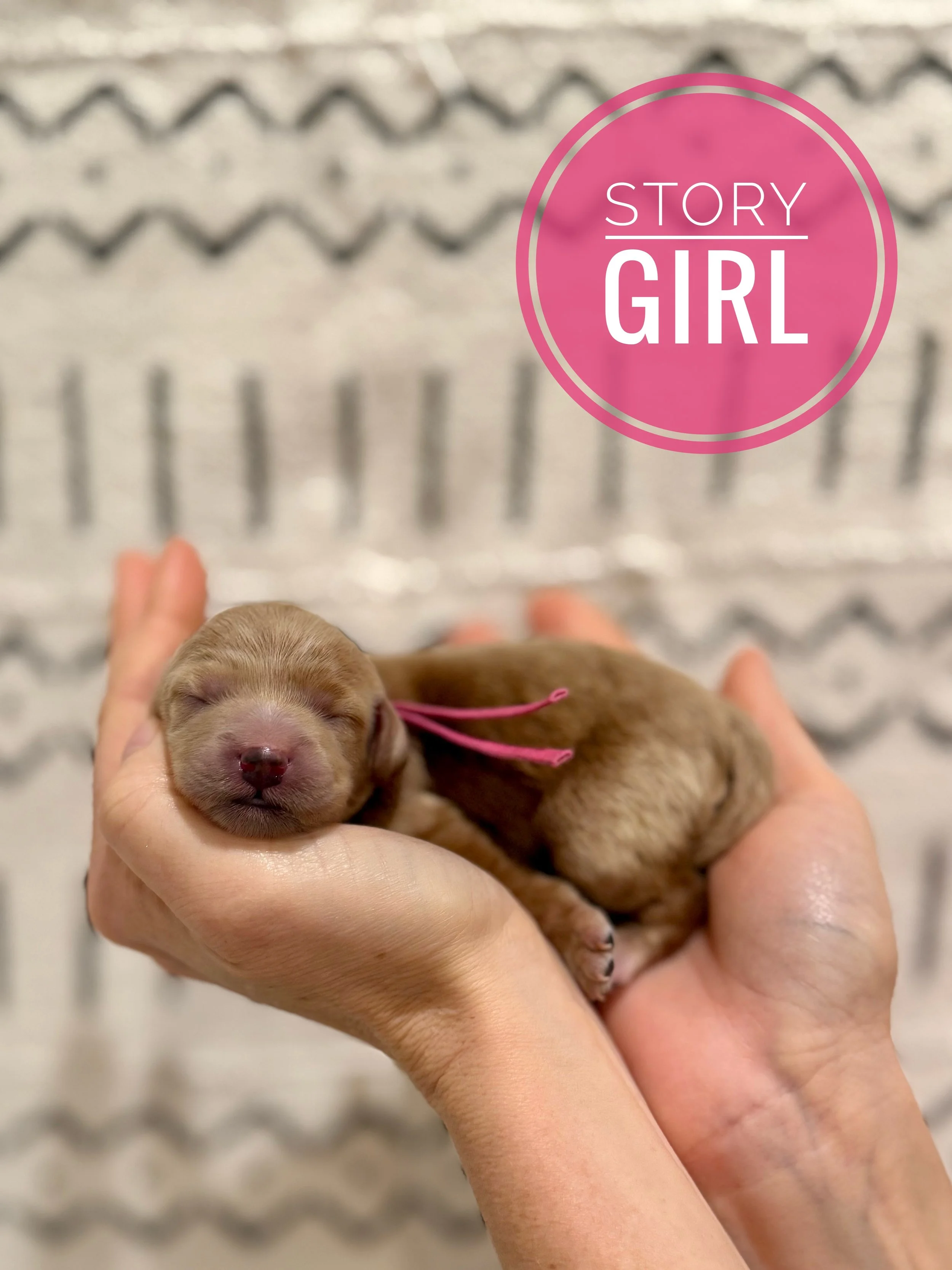
You may even find yourself wondering, What do all these tests actually mean? And how do I know whether a breeder is truly prioritizing the health of their puppies?
At Windsong Doodles, we believe health testing is one of the most important parts of responsible Goldendoodle breeding—but it is only one part of the bigger picture.
Our goal isn’t simply to produce dogs that “pass” a series of tests. We want to make thoughtful breeding decisions that consider health, structure, genetics, temperament, lineage, and real-world outcomes.
What Health Testing Can—and Can’t—Tell You
Health testing is designed to help reduce the risk of inherited conditions and identify potential concerns before a dog is included in a breeding program. It can provide valuable information about orthopedic health, cardiac health, and genetic conditions that may be passed from parents to puppies.
At Windsong, our parent dogs are evaluated through a combination of orthopedic testing, cardiac testing, and genetic screening. Depending on the dog, this includes OFA or PennHIP evaluations for hips, OFA elbow evaluations, cardiac testing, and genetic screening through providers such as Embark Veterinary or Paw Print Genetics.
But there is an important distinction:
Health testing reduces risk. It does not eliminate every possible health concern.
A puppy is much more than a collection of test results. Genetics, early development, nutrition, environment, socialization, training, and lifelong care all contribute to how a dog develops.
That’s why we look at the complete picture.
The Health Testing Behind Our Breeding Program
Before a dog is selected for a breeding pairing at Windsong, we evaluate several important areas.
Our health-testing process includes:
Hip evaluations through OFA or PennHIP
Elbow evaluations through OFA
Cardiac testing
Genetic screening through Embark Veterinary or Paw Print Genetics
Additional genetic verification through Animal Genetics when appropriate
These evaluations help us make more informed decisions about which dogs should continue in our breeding program.
If results don't meet our standards, we don't move forward with that dog.
That may sound simple, but responsible breeding requires being willing to make those decisions—even when a dog has other qualities you love.
Why OFA and PennHIP Testing Matter
Hip and elbow health are particularly important when you're breeding active, athletic family dogs.
OFA and PennHIP evaluations provide information about orthopedic health and help breeders make more informed decisions when planning future generations.
At Windsong, many of our dogs receive preliminary hip and elbow evaluations early in life. These preliminary evaluations can help us make responsible decisions about whether a young dog should remain in our breeding program.
The goal isn't simply to collect certificates.
The goal is to use the information to make better breeding decisions.
Genetic Testing Is Another Piece of the Puzzle
DNA testing can help identify whether a dog carries certain inherited genetic conditions.
That information becomes particularly useful when planning a pairing.
Knowing the genetic status of both parents allows a breeder to make informed choices and avoid combinations that could increase the likelihood of certain inherited conditions.
At Windsong, genetic screening is part of our evaluation process, and results may be checked through more than one testing provider when appropriate.
But once again, a genetic panel isn't the whole story.
Two dogs can have excellent test results on paper and still produce puppies with very different temperaments, structures, or personalities depending on the pairing.
That's where experience matters.
Why Responsible Breeding Goes Beyond Health Tests
One of the biggest misconceptions about responsible breeding is that you can simply look at a list of certifications and determine whether a breeder is doing everything correctly.
We don't believe it's quite that simple.
At Windsong, every pairing is considered based on multiple factors, including:
Structure and movement
Temperament
Genetic compatibility
Family history
Previous generations
Previous litters
Real-world outcomes
We don't just look at the two dogs standing in front of us.
We look at their history.
We consider parents, grandparents, previous litters, and the puppies that have grown up and gone on to live with families. That history gives us information that a laboratory report can't provide on its own.
We Want to Know What Our Lines Actually Produce
This is one of the reasons experience matters so much in a breeding program.
Over time, breeders learn about their lines.
They see which traits consistently appear. They learn which pairings produce particular temperaments. They become familiar with strengths, potential weaknesses, structure, energy levels, and the qualities families value most.
That doesn't replace health testing.
It works alongside it.
Science gives us valuable information. Experience helps us understand how to use it.
What Should Families Ask a Goldendoodle Breeder?
If you're researching Goldendoodle breeders, don't be afraid to ask questions.
A responsible breeder should be able to explain:
What health testing is performed on the parents?
Which organizations or laboratories perform the testing?
What do the results mean?
How are health results used when choosing pairings?
What is known about previous generations?
How are puppies raised and socialized?
What health guarantee is provided?
What support is available after your puppy comes home?
At Windsong, we're happy to share OFA records, genetic testing results, and information about our process. We also believe families deserve an explanation—not simply a collection of documents.
Because having a test result is one thing.
Understanding what that result means for a breeding program is another.
Our Goal: Healthy Dogs for Real Life
Ultimately, responsible Goldendoodle breeding isn't about producing a puppy that looks perfect on paper.
It's about giving that puppy the best possible foundation for a long, healthy, happy life.
Health testing is an essential part of that foundation. So are thoughtful pairings, strong genetic history, early development, socialization, responsible puppy raising, and matching each puppy with the right family.
At Windsong Doodles, we take all of those pieces seriously.
Because when you're bringing home a Goldendoodle, you're not just choosing a puppy.
You're choosing the beginning of a relationship that you hope will last for many years.
And we believe that relationship should start with responsible breeding, thoughtful decisions, and a whole lot of care.